How Infrastructure Management Services Improve Reliability and Accelerate Logistics Growth

Key Takeaways
Infrastructure management reduces system downtime across logistics operations.
Reliable IT environments improve supply chain visibility and operational efficiency.
Managed infrastructure services help logistics companies scale without increasing IT complexity.
Proactive monitoring prevents disruptions that impact deliveries and customer satisfaction.
Cloud-based infrastructure improves flexibility, security, and business continuity.
Logistics organizations can accelerate digital transformation through modern infrastructure management solutions.
Partnering with an experienced technology provider helps businesses achieve long-term growth and reliability.
The logistics industry is evolving rapidly as businesses strive to meet growing customer expectations for faster deliveries, real-time tracking, and seamless supply chain operations. Modern logistics companies rely on a complex ecosystem of transportation management systems, warehouse management platforms, IoT devices, cloud applications, and data-driven technologies to keep operations running efficiently. However, as digital infrastructure becomes more sophisticated, the risk of system downtime, performance bottlenecks, security threats, and operational disruptions also increases.
This is where Logistics Infrastructure Management Services play a critical role. By proactively monitoring, maintaining, and optimizing IT environments, these services help logistics organizations ensure high system availability, improve operational reliability, and support scalable business growth. From managing cloud infrastructure and network performance to strengthening cybersecurity and disaster recovery capabilities, infrastructure management creates the technological foundation required for modern supply chains.
In today's highly competitive logistics landscape, investing in reliable infrastructure is no longer optional—it is essential for improving efficiency, enhancing customer satisfaction, and accelerating long-term business growth.
What Are Infrastructure Management Services?
Infrastructure Management Services refer to the continuous monitoring, maintenance, optimization, and protection of IT environments that support logistics operations. These solutions help organizations improve system performance, strengthen security, and ensure business continuity across critical logistics processes. Modern infrastructure managed services provide proactive support for networks, servers, cloud platforms, and data systems, allowing logistics companies to reduce operational risks, improve reliability, and create a scalable technology foundation for future growth and digital transformation initiatives.
Network Management
Network management focuses on monitoring, optimizing, and maintaining communication networks that connect logistics systems, warehouses, vehicles, and business applications. A well-managed network ensures uninterrupted data flow, minimizes latency, improves connectivity across locations, and supports real-time visibility throughout the supply chain. Reliable network performance is essential for maintaining operational efficiency and preventing costly disruptions.
Server Management
Server management involves maintaining the physical and virtual servers that host logistics applications, databases, and operational systems. This includes performance monitoring, software updates, resource optimization, and issue resolution. Effective server management helps logistics companies maintain system availability, reduce downtime, improve application performance, and support business-critical operations without interruption.
Cloud Infrastructure Management
Cloud infrastructure management ensures that cloud-based resources, applications, and services remain secure, scalable, and cost-efficient. Logistics organizations increasingly rely on cloud platforms to support real-time tracking, analytics, and collaboration. Proper cloud management enables businesses to scale operations quickly, improve flexibility, and maintain consistent performance during periods of increased demand.
Security Management
Security management protects logistics infrastructure from cyber threats, unauthorized access, ransomware attacks, and data breaches. It includes continuous monitoring, threat detection, vulnerability management, access control, and compliance enforcement. Strong security measures help logistics companies safeguard sensitive operational data, maintain customer trust, and ensure uninterrupted business operations.
Data Storage and Backup Management
Data storage and backup management ensure that critical logistics information remains accessible, protected, and recoverable in the event of system failures or cyber incidents. By implementing reliable backup strategies and disaster recovery plans, organizations can minimize data loss, support regulatory compliance, and maintain business continuity during unexpected disruptions.
Why Infrastructure Management Matters in Logistics
Real-Time Logistics Operations
Modern logistics depends on real-time access to operational data, shipment status, inventory levels, and delivery information. Infrastructure management ensures that the systems supporting these activities remain available and responsive. This enables organizations to make faster decisions, improve coordination across supply chain networks, and enhance overall operational efficiency.
Fleet Management Systems
Fleet management platforms rely on stable infrastructure to track vehicles, monitor driver performance, optimize routes, and manage fuel consumption. Infrastructure management ensures these systems operate reliably, providing logistics companies with accurate insights that help reduce operational costs, improve delivery performance, and maximize fleet utilization.
Warehouse Automation
Automated warehouses use connected technologies such as sensors, robotics, inventory management systems, and automated workflows. Infrastructure management supports the availability and performance of these technologies, helping businesses improve order accuracy, increase productivity, reduce manual intervention, and streamline warehouse operations.
Transportation Management Platforms
Transportation management platforms coordinate shipping activities, route planning, carrier communication, and delivery scheduling. Effective infrastructure management ensures these platforms remain secure, scalable, and highly available. This enables logistics providers to improve shipment visibility, optimize transportation costs, and deliver a better customer experience.
The Growing Infrastructure Challenges Facing Logistics Companies
As logistics operations become increasingly digital, organizations face growing infrastructure challenges that directly impact efficiency, reliability, and scalability. Modern supply chains depend on interconnected systems, cloud platforms, real-time data exchange, and automated workflows to meet customer demands. However, maintaining these complex environments is becoming more difficult due to evolving technology requirements, rising security threats, and limited IT resources. Understanding these challenges is essential for logistics companies seeking sustainable growth and operational excellence.
Increasing Supply Chain Complexity
Global supply chains involve multiple stakeholders, transportation networks, warehouses, suppliers, and technology platforms working together in real time. As operations expand across regions and channels, managing the underlying IT infrastructure becomes increasingly complex. Logistics companies need reliable infrastructure management to ensure seamless connectivity, data synchronization, and uninterrupted communication across the entire supply chain ecosystem.
Rising Customer Expectations for Faster Deliveries
Customers now expect same-day or next-day delivery, real-time shipment tracking, and instant updates throughout the delivery journey. Meeting these expectations requires highly available and responsive technology systems. Any infrastructure downtime, network failure, or application performance issue can lead to delays, reduced customer satisfaction, and lost business opportunities in an increasingly competitive market.
Cybersecurity Risks Across Logistics Networks
The logistics sector handles large volumes of sensitive operational, financial, and customer data, making it a frequent target for cyberattacks. Ransomware, phishing attacks, data breaches, and unauthorized access can disrupt supply chain operations and cause significant financial losses. Strong infrastructure management helps organizations strengthen security controls, identify vulnerabilities, and maintain compliance with industry regulations.
Legacy Infrastructure Limiting Growth
Many logistics organizations continue to rely on outdated servers, applications, and network systems that struggle to support modern business requirements. Legacy infrastructure often leads to poor performance, higher maintenance costs, limited scalability, and integration challenges. Upgrading and modernizing infrastructure is essential for supporting digital transformation, automation initiatives, and future business expansion.
Lack of Internal IT Resources
Managing complex infrastructure requires specialized expertise in cloud computing, cybersecurity, networking, system administration, and performance optimization. Many logistics companies face challenges in recruiting and retaining skilled IT professionals. As technology environments become more sophisticated, limited internal resources can slow innovation, increase operational risks, and make it difficult to maintain reliable business operations.

Industry Statistics and Market Insights
Logistics Infrastructure Trends and Industry Statistics
Modern logistics organizations are rapidly increasing investments in digital infrastructure to support growing customer demands and supply chain complexity. Industry research highlights the importance of reliable infrastructure management in maintaining operational efficiency and business continuity.
Key Industry Insights
Supply chain disruptions can cost logistics businesses millions of dollars annually through delayed deliveries and operational inefficiencies.
Cyberattacks targeting logistics and transportation companies continue to increase as supply chains become more digitally connected.
Cloud adoption in logistics is accelerating as organizations seek greater scalability, flexibility, and cost optimization.
Real-time visibility technologies are becoming a competitive necessity for logistics providers aiming to improve customer experiences.
AI-powered infrastructure monitoring is helping organizations reduce downtime by identifying potential system issues before they impact operations.
These trends demonstrate why modern infrastructure management has become a critical investment for logistics companies focused on growth, resilience, and long-term competitiveness.
How Logistics Infrastructure Management Services Improve Reliability
Reliability is one of the most important factors in successful logistics operations. Even a brief system outage can disrupt shipments, delay deliveries, impact customer satisfaction, and increase operational costs. Logistics Infrastructure Management Services help organizations maintain stable, secure, and high-performing IT environments by proactively monitoring systems, minimizing risks, and ensuring business continuity. By reducing disruptions and improving infrastructure performance, logistics companies can achieve greater operational consistency and long-term reliability.
Proactive Infrastructure Monitoring
Proactive monitoring allows logistics organizations to identify performance issues, capacity constraints, and potential failures before they affect operations. Continuous monitoring of networks, servers, cloud environments, and applications provides real-time insights into system health. This preventive approach helps businesses avoid unexpected disruptions, maintain optimal performance, and ensure critical logistics platforms remain available around the clock.
Minimizing System Downtime
Unplanned downtime can significantly impact transportation schedules, warehouse operations, and customer service. Infrastructure management services reduce downtime through preventive maintenance, performance optimization, automated alerts, and continuous system monitoring. By addressing potential issues before they escalate, logistics companies can maintain uninterrupted operations and protect revenue-generating business activities.
Faster Incident Detection and Resolution
When technical issues occur, rapid identification and response are critical for minimizing operational disruptions. Infrastructure management teams use advanced monitoring tools and automated diagnostics to quickly detect incidents and resolve problems. Faster response times reduce system recovery periods, improve operational stability, and help maintain seamless logistics workflows.
Business Continuity and Disaster Recovery Planning
Unexpected events such as cyberattacks, hardware failures, natural disasters, or network outages can disrupt logistics operations. Business continuity and disaster recovery strategies ensure organizations can quickly restore critical systems and continue serving customers. Effective planning minimizes operational risks, reduces financial losses, and strengthens overall business resilience.
Data Backup and Infrastructure Resilience
Logistics companies generate and process large volumes of operational and customer data every day. Reliable backup solutions protect this information from accidental loss, system failures, and security incidents. Combined with resilient infrastructure architecture, backup strategies help organizations recover quickly, maintain compliance, and ensure uninterrupted access to critical business data.
How Managed Infrastructure Services for Logistics Accelerate Business Growth
As logistics businesses expand, they require technology environments that can scale without compromising performance or security. Managed infrastructure services help organizations improve operational efficiency, support real-time visibility, and optimize technology investments. Partnering with an experienced logistics software development company can further enhance these benefits by integrating custom logistics platforms, automation tools, and cloud-based solutions into existing infrastructure. This combination enables businesses to streamline operations, improve customer experiences, and accelerate long-term growth while maintaining system reliability.
Supporting Business Scalability
As logistics operations grow, infrastructure requirements become more complex. Managed infrastructure services provide scalable technology environments that can support expanding warehouses, transportation networks, customer bases, and digital platforms. This flexibility enables organizations to grow without facing infrastructure limitations that could slow business expansion.
Enabling Real-Time Data Visibility
Real-time visibility is essential for effective logistics management. Infrastructure services ensure the availability and performance of systems that collect, process, and distribute operational data. This allows organizations to monitor shipments, inventory, fleet performance, and customer interactions in real time, leading to faster decision-making and improved operational control.
Improving Warehouse and Fleet Operations
Warehouse management systems and fleet tracking platforms rely on reliable infrastructure to function efficiently. Infrastructure management ensures these systems remain responsive, secure, and accessible. Improved system performance enhances inventory accuracy, route optimization, asset utilization, and overall operational productivity across logistics networks.
Optimizing Resource Utilization
Infrastructure management helps organizations maximize the value of their technology investments by optimizing computing resources, storage capacity, network performance, and cloud utilization. Efficient resource allocation reduces waste, improves system performance, and enables logistics companies to achieve greater operational efficiency without unnecessary infrastructure expenses.
Reducing Operational Costs
Maintaining complex IT environments internally can be expensive and resource-intensive. Managed infrastructure services reduce costs by streamlining maintenance, improving infrastructure efficiency, preventing downtime, and minimizing unexpected technology-related expenses. This allows logistics organizations to focus more resources on strategic growth initiatives and customer service improvements.
Real-World Logistics Infrastructure Success Stories
Real-World Examples of Infrastructure Management in Logistics
Many leading logistics organizations have invested heavily in infrastructure modernization to improve visibility, operational efficiency, and customer satisfaction.
DHL and Cloud-Based Logistics Operations
DHL has adopted cloud technologies and digital infrastructure solutions to improve shipment visibility, enhance operational scalability, and support global logistics coordination. Cloud infrastructure enables the company to process large volumes of operational data while maintaining high system availability.
FedEx and Real-Time Tracking Infrastructure
FedEx relies on advanced infrastructure systems to support real-time package tracking, route optimization, and customer communication. Reliable infrastructure management ensures uninterrupted access to shipment information and improves delivery transparency.
Amazon and Warehouse Automation
Amazon utilizes highly automated warehouse environments supported by scalable infrastructure, cloud computing, and intelligent monitoring systems. These technologies help improve inventory accuracy, order fulfillment speed, and operational efficiency across its logistics network.
These examples illustrate how reliable infrastructure management supports innovation, scalability, and operational excellence within modern logistics organizations.
The Role of IT Infrastructure Management for Logistics in Supply Chain Performance
A modern supply chain depends on technology systems that enable communication, coordination, visibility, and automation across every stage of logistics operations. IT Infrastructure Management for Logistics ensures that these systems remain secure, reliable, and high-performing. By supporting critical logistics technologies, infrastructure management helps organizations improve supply chain efficiency, enhance customer experiences, and achieve greater operational agility in an increasingly competitive market.
Transportation Management Systems (TMS)
Transportation Management Systems (TMS) are critical for planning, executing, and optimizing the movement of goods across supply chains. These platforms rely on stable and high-performing infrastructure to manage carrier selection, shipment scheduling, freight tracking, and delivery coordination. Effective IT infrastructure management ensures TMS platforms remain available, secure, and responsive, enabling logistics companies to improve transportation efficiency, reduce operational costs, and deliver a better customer experience.
Warehouse Management Systems (WMS)
Warehouse Management Systems (WMS) help logistics organizations manage inventory, order fulfillment, storage allocation, and warehouse workflows. Since these systems process large volumes of real-time operational data, they require reliable infrastructure to maintain performance and accuracy. Infrastructure management supports continuous system availability, minimizes disruptions, and enables warehouses to operate efficiently while improving inventory visibility and order processing speed.
Route Optimization Platforms
Route optimization platforms use advanced algorithms and real-time data to identify the most efficient delivery routes. These systems depend on robust infrastructure to process traffic conditions, fuel consumption data, delivery schedules, and vehicle locations. Proper infrastructure management ensures consistent platform performance, helping logistics providers reduce transportation costs, improve delivery timelines, and maximize fleet productivity.
IoT and Connected Logistics Infrastructure
The logistics industry increasingly relies on Internet of Things (IoT) devices such as GPS trackers, sensors, telematics systems, and connected equipment to monitor operations in real time. Infrastructure management ensures seamless connectivity between these devices and business systems, enabling accurate data collection, improved asset visibility, proactive maintenance, and smarter operational decision-making throughout the supply chain.
Real-Time Tracking and Analytics
Real-time tracking and analytics platforms provide logistics companies with instant visibility into shipments, inventory movements, fleet performance, and operational metrics. These systems require secure and scalable infrastructure capable of processing large volumes of data without delays. Effective infrastructure management ensures accurate reporting, faster decision-making, enhanced supply chain visibility, and improved customer satisfaction through timely and transparent updates.
Infrastructure Management Solutions for Logistics and Digital Transformation
Digital transformation has become a strategic priority for logistics organizations seeking to improve efficiency, visibility, and customer experience. However, successful transformation depends on a reliable and scalable technology foundation. Infrastructure Management Solutions for Logistics enable businesses to modernize operations, integrate emerging technologies, and support innovation without compromising performance or security. By leveraging advanced infrastructure strategies, logistics companies can build agile supply chains capable of adapting to evolving market demands.
Cloud Migration and Hybrid Infrastructure
Cloud migration allows logistics organizations to move critical applications, data, and workloads from traditional on-premises environments to scalable cloud platforms. Hybrid infrastructure combines cloud resources with existing systems, providing greater flexibility and control. Effective infrastructure management ensures seamless migration, optimized performance, enhanced security, and the ability to scale operations as business requirements grow.
Automation and Intelligent Operations
Automation is transforming logistics by reducing manual tasks, streamlining workflows, and improving operational accuracy. Infrastructure management supports automated systems by ensuring continuous connectivity, system reliability, and optimal performance. This enables organizations to improve productivity, accelerate operational processes, and reduce human errors across warehouses, transportation networks, and supply chain operations.
AI-Powered Infrastructure Monitoring
Artificial intelligence is increasingly being used to monitor infrastructure performance, identify anomalies, and predict potential system failures. AI-powered monitoring tools analyze large volumes of operational data in real time, helping logistics organizations detect issues before they impact business operations. This proactive approach improves reliability, reduces downtime, and enhances overall infrastructure efficiency.
Edge Computing for Logistics Operations
Edge computing processes data closer to where it is generated, reducing latency and improving response times. In logistics environments, edge computing supports real-time fleet tracking, warehouse automation, IoT devices, and connected transportation systems. Infrastructure management ensures edge environments remain secure, reliable, and integrated with central business systems for seamless operational performance.
Data-Driven Decision Making
Modern logistics companies depend on accurate and timely data to make strategic decisions. Infrastructure management ensures that data flows efficiently across systems, applications, and business units. By maintaining high-performance data environments, organizations can gain valuable operational insights, improve forecasting accuracy, optimize resource allocation, and drive continuous business improvement.
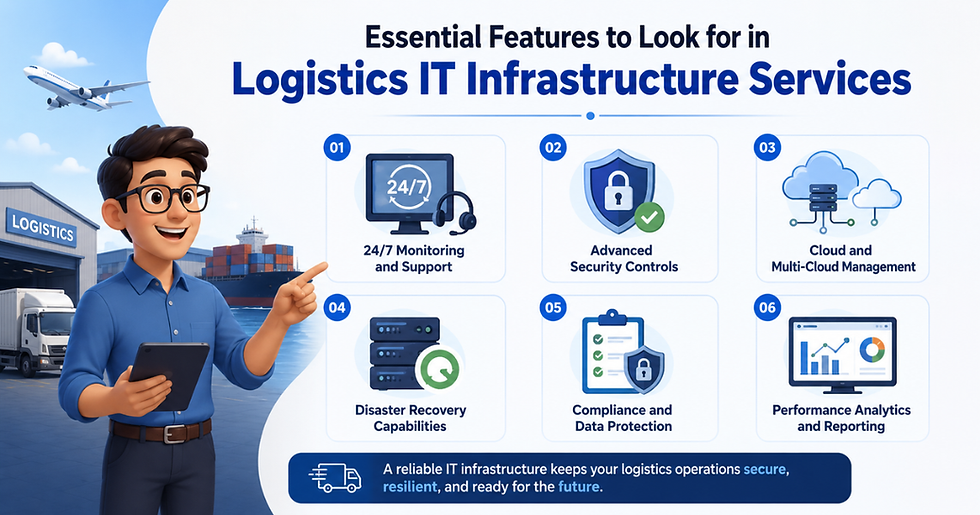
Essential Features to Look for in Logistics IT Infrastructure Services
Selecting the right Logistics IT Infrastructure Services provider is critical for maintaining operational reliability, security, and business scalability. A comprehensive infrastructure management solution should include advanced monitoring capabilities, strong security measures, cloud expertise, and proactive support services that align with the unique demands of modern logistics operations.
24/7 Monitoring and Support
Logistics operations often run around the clock, making continuous infrastructure monitoring essential. A reliable infrastructure management provider offers 24/7 monitoring and technical support to identify issues quickly, minimize downtime, and ensure critical systems remain operational. Continuous oversight helps organizations maintain service reliability and improve operational continuity.
Advanced Security Controls
Cybersecurity is a growing concern across the logistics industry. Effective infrastructure services should include threat detection, vulnerability management, access controls, security monitoring, and incident response capabilities. These measures help protect sensitive business data, reduce cyber risks, and ensure compliance with industry security standards.
Cloud and Multi-Cloud Management
Many logistics organizations operate across multiple cloud environments to improve flexibility and resilience. Infrastructure management services should provide expertise in cloud deployment, optimization, migration, and multi-cloud governance. Effective cloud management enables businesses to maximize performance, improve scalability, and control infrastructure costs.
Disaster Recovery Capabilities
Unexpected disruptions can have a significant impact on logistics operations. Disaster recovery solutions ensure critical systems and data can be restored quickly following hardware failures, cyber incidents, or natural disasters. Strong recovery capabilities help organizations maintain business continuity and minimize operational downtime.
Compliance and Data Protection
Logistics companies must often comply with industry regulations and data protection requirements. Infrastructure management services should include compliance monitoring, data governance, encryption, access management, and audit support. These capabilities help organizations reduce regulatory risks while protecting sensitive customer and operational information.
Performance Analytics and Reporting
Comprehensive analytics and reporting provide valuable insights into infrastructure performance, resource utilization, security posture, and system availability. Infrastructure management providers use these insights to identify optimization opportunities, improve operational efficiency, and support strategic technology planning. Performance visibility enables logistics organizations to make informed decisions that drive continuous improvement.
Measuring the ROI of Managed Infrastructure Services for Logistics
Investing in Managed Infrastructure Services for Logistics is not only about maintaining technology systems—it is a strategic decision that directly impacts operational performance, customer experience, and long-term business growth. To evaluate the success of infrastructure management initiatives, logistics organizations must measure the return on investment (ROI) through key business outcomes such as reduced downtime, improved efficiency, lower operational costs, and increased scalability. Understanding these benefits helps businesses justify technology investments while identifying opportunities for continuous improvement.
Reduced Downtime Costs
System downtime can disrupt transportation schedules, warehouse operations, inventory management, and customer communications. Even a short outage can lead to delayed deliveries, lost productivity, and financial losses. Managed infrastructure services reduce downtime through proactive monitoring, preventive maintenance, and rapid issue resolution. As a result, logistics companies experience fewer disruptions, lower recovery costs, and more consistent operational performance.
Improved Operational Efficiency
A well-managed infrastructure ensures that logistics applications, networks, cloud platforms, and operational systems perform at optimal levels. Improved system reliability enables employees to complete tasks more efficiently while reducing delays caused by technical issues. Enhanced operational efficiency leads to faster workflows, better resource utilization, and increased productivity across the entire supply chain.
Faster Delivery Performance
Modern logistics operations rely on real-time data, route optimization platforms, fleet management systems, and transportation management solutions to meet customer expectations. Infrastructure management ensures these technologies remain responsive and available, allowing organizations to improve delivery accuracy, optimize transportation routes, and reduce shipment delays. Faster delivery performance contributes directly to stronger business outcomes and competitive advantage.
Increased Customer Satisfaction
Customers expect accurate tracking information, reliable delivery timelines, and seamless communication throughout the shipping process. Infrastructure management helps maintain the availability and performance of customer-facing systems, ensuring a smooth and dependable experience. Improved service reliability enhances customer trust, strengthens brand reputation, and increases customer retention over time.
Lower IT Maintenance Expenses
Managing complex infrastructure internally often requires significant investments in personnel, tools, system upgrades, and ongoing maintenance activities. Managed infrastructure services help reduce these costs by providing specialized expertise, proactive support, and efficient resource management. This allows logistics organizations to control IT spending while gaining access to advanced infrastructure capabilities and best practices.
Long-Term Scalability Benefits
As logistics companies expand their operations, infrastructure demands continue to grow. Managed infrastructure services provide scalable technology environments that support increasing shipment volumes, additional facilities, new digital platforms, and evolving business requirements. This scalability enables organizations to grow efficiently without major infrastructure disruptions, ensuring long-term operational stability and sustainable business growth.
Infrastructure Management vs Traditional IT Support: What's the Difference?
Many logistics organizations mistakenly view infrastructure management and traditional IT support as the same service. While both contribute to maintaining technology environments, their objectives, scope, and business impact are significantly different. Traditional IT support typically focuses on resolving issues after they occur, whereas Infrastructure Management Services emphasize proactive monitoring, optimization, security, and long-term operational reliability. Understanding these differences helps logistics companies choose the right approach to support growth, resilience, and digital transformation.
Reactive vs Proactive Operations
Traditional IT support primarily follows a reactive model, addressing technical issues only after users report them. This approach can lead to unexpected downtime and operational disruptions. Infrastructure management, on the other hand, uses continuous monitoring, automated alerts, and predictive analysis to identify potential problems before they impact business operations. This proactive strategy improves system reliability and minimizes interruptions across logistics networks.
Cost Comparison
Although traditional IT support may appear less expensive initially, recurring outages, emergency repairs, and productivity losses can increase long-term costs. Infrastructure management focuses on prevention rather than correction, reducing downtime-related expenses and improving resource efficiency. Over time, this approach often delivers a stronger return on investment by lowering operational risks and reducing unexpected technology costs.
Scalability Advantages
As logistics businesses expand, technology requirements become increasingly complex. Traditional IT support may struggle to keep pace with growing infrastructure demands, cloud adoption, and digital transformation initiatives. Infrastructure management services are designed to scale alongside business growth, providing the flexibility and expertise needed to support expanding operations, new technologies, and evolving customer expectations.
Security and Risk Management
Cybersecurity threats continue to grow across the logistics industry, making risk management a critical business priority. Traditional IT support often focuses on resolving technical issues rather than continuously monitoring security risks. Infrastructure management incorporates advanced security controls, threat detection, vulnerability management, compliance monitoring, and disaster recovery planning to protect critical systems and sensitive business data.
Strategic Business Impact
Traditional IT support is typically viewed as an operational function that maintains technology systems. Infrastructure management takes a more strategic approach by aligning technology performance with business objectives. Through continuous optimization, performance monitoring, and innovation support, infrastructure management helps logistics organizations improve operational efficiency, accelerate growth, and strengthen their competitive position in the marketplace.
Infrastructure Management vs Traditional IT Support Table
Quick Comparison Table
Feature | Traditional IT Support | Infrastructure Management Services |
Support Approach | Reactive | Proactive |
Monitoring | Limited | Continuous 24/7 |
Downtime Prevention | Low | High |
Security Management | Basic | Advanced |
Disaster Recovery | Limited | Comprehensive |
Cloud Management | Often Limited | Fully Managed |
Scalability Support | Moderate | High |
Business Continuity | Reactive Response | Strategic Planning |
Cost Efficiency | Higher Long-Term Costs | Lower Operational Costs |
Growth Enablement | Limited | Strong Business Support |
This comparison highlights why many logistics organizations are transitioning from traditional IT support models to proactive infrastructure management strategies.
Future Trends Shaping Logistics Infrastructure Management
The logistics industry is entering a new era of digital transformation driven by artificial intelligence, automation, advanced analytics, and sustainability initiatives. As technology continues to evolve, Infrastructure Management Solutions for Logistics must adapt to support smarter, faster, and more resilient supply chain operations. Organizations that embrace emerging infrastructure trends will be better positioned to improve efficiency, reduce costs, and gain a competitive advantage in the years ahead.
AI-Driven Infrastructure Automation
Artificial intelligence is transforming infrastructure management by automating routine tasks, identifying performance anomalies, and optimizing system resources in real time. AI-driven automation reduces manual intervention, improves operational efficiency, and enables faster issue resolution. As logistics environments become more complex, intelligent automation will play a critical role in maintaining infrastructure reliability and scalability.
Autonomous Supply Chain Operations
The future of logistics is increasingly focused on autonomous operations powered by connected technologies, robotics, artificial intelligence, and real-time analytics. Infrastructure management provides the stable and secure foundation required to support autonomous warehouses, self-optimizing transportation systems, and intelligent supply chain workflows. These innovations help organizations improve speed, accuracy, and operational efficiency.
Digital Twins in Logistics
Digital twin technology creates virtual representations of physical logistics assets, facilities, and supply chain processes. By using real-time data, organizations can simulate operations, evaluate performance, and identify optimization opportunities before implementing changes in the real world. Infrastructure management ensures the connectivity, computing power, and data integration capabilities necessary to support digital twin environments.
Predictive Infrastructure Management
Predictive infrastructure management leverages artificial intelligence, machine learning, and advanced analytics to forecast potential system failures and performance issues before they occur. This proactive approach enables logistics organizations to address infrastructure risks early, reduce downtime, improve resource planning, and maintain uninterrupted operations across critical business systems.
Sustainable and Green IT Infrastructure
Sustainability is becoming a major priority for logistics organizations seeking to reduce environmental impact while controlling operational costs. Modern infrastructure management strategies focus on energy-efficient data centers, optimized cloud resource utilization, sustainable hardware practices, and reduced carbon emissions. Green IT initiatives not only support environmental goals but also improve operational efficiency and long-term business sustainability.
Common Signs Your Logistics Infrastructure Needs Modernization
Many logistics organizations continue operating on outdated infrastructure without realizing the impact it has on performance and growth. Common warning signs include:
Frequent system downtime and outages
Slow application performance
Limited scalability during peak demand periods
Increasing cybersecurity incidents
Rising infrastructure maintenance costs
Poor integration between logistics platforms
Lack of real-time operational visibility
Difficulty supporting cloud and automation initiatives
If your organization experiences any of these challenges, investing in modern infrastructure management solutions can help improve reliability, operational efficiency, and long-term business scalability.
Why SISGAIN Is a Strategic Partner for Logistics Infrastructure Management
As logistics companies continue to modernize their operations, choosing the right technology partner becomes essential for maintaining reliability, security, and long-term scalability. SISGAIN combines deep industry expertise with advanced infrastructure management capabilities to help logistics organizations optimize performance, reduce operational risks, and accelerate digital transformation. From cloud modernization and cybersecurity to AI-ready infrastructure and custom platform integration, SISGAIN delivers comprehensive solutions that enable logistics businesses to build resilient technology ecosystems, improve operational efficiency, and support sustainable growth in an increasingly competitive and technology-driven market.

Conclusion
In today's fast-moving logistics industry, reliable IT infrastructure is the foundation of operational efficiency, supply chain visibility, and business growth. Effective Infrastructure Management Services help logistics organizations minimize downtime, strengthen cybersecurity, improve system performance, and scale operations with confidence. As technologies such as artificial intelligence, cloud computing, automation, and real-time analytics become increasingly important, businesses need infrastructure that can support future innovation and evolving customer expectations. By investing in strategic infrastructure management solutions, logistics companies can build resilient, agile, and future-ready operations that enhance competitiveness, improve customer satisfaction, and drive sustainable long-term growth.
Frequently Asked Questions
What are Logistics Infrastructure Management Services?
Logistics Infrastructure Management Services involve monitoring, maintaining, securing, and optimizing IT systems, networks, servers, cloud platforms, and data environments that support logistics operations.
How do Managed Infrastructure Services benefit logistics companies?
Managed Infrastructure Services improve system reliability, reduce downtime, enhance security, optimize operational performance, and provide scalable technology support for business growth.
Why is IT Infrastructure Management important for logistics operations?
IT Infrastructure Management ensures logistics systems remain secure, available, and efficient, enabling real-time visibility, faster decision-making, and uninterrupted supply chain operations.
What technologies are included in Logistics IT Infrastructure Services?
These services typically include network management, cloud infrastructure, server management, cybersecurity, data backup, disaster recovery, monitoring tools, and analytics platforms.
Can infrastructure management reduce logistics downtime?
Yes. Proactive monitoring, preventive maintenance, automated alerts, and rapid issue resolution help identify problems early and significantly reduce costly operational downtime.


Mình có lần lướt đọc mấy trao đổi trên mạng شيخ روحاني thì thấy nhắc nên cũng tò mò mở ra xem thử cho biết. Mình không tìm hiểu sâu جلب الحبيب chỉ xem qua trong thời gian ngắn để quan sát bố cục جلب الحبيب cách sắp xếp شيخ روحاني các mục và trình bày nội شيخ روحاني dung tổng thể. Cảm giác là các phần được trình bày khá gọn, các huren berlin mục rõ ràng nên đọc lướt cũng không bị rối với mình như Hurentest Berlin vậy là đủ để nắm tin cơ bản rồi. جلب الحبيب
,
,